

La Nena
1930
Arturo Martini
‘La Nena’ (the girl) is the pet name of Maria, the daughter of Arturo Martini. In 1930 he immortalized her in terracotta. It is a lifelike image that captures Maria’s sad expression well. Martini portrays her at the moment she leaves for boarding school as a 9-year-old. She stares out of the train window with her mouth slightly open and a dreamy look. She leans forward a little, crosses her arms in front of her chest and tries to hold the hat on her twisted braids.

Details
- Plan number: C17
- Zone: Collection pavilion
- Title: La Nena
- Creator: Arturo Martini
- Date: 1930
- Material: terracotta
- Acquisition: donation, 1953
- Object number: MID.B.062
Since the 1920s, Martini has been exploring the possibilities of the bust (a sculpture depicting the head, shoulders and chest). He plays with the two opposing poles of the portrait genre: the individual (in this case his daughter) and the type (here: the girl lost in thought).
For Martini, his daughter, who leaves for boarding school as a young girl, deserves a statue. He does not draw attention to a historical hero or event, but to an important moment in the lives of ordinary people.
In the work of the Italian sculptor Arturo Martini, his admiration for Etruscan and classical sculpture is recognizable, but at the same time there is also a modern touch. He became known for his public sculptures commissioned by fascist Italy in the 1930s and 1940s. He works mainly figuratively and with a variety of materials, from clay to wood and stone to silver.
From the same artist
Arturo Martini
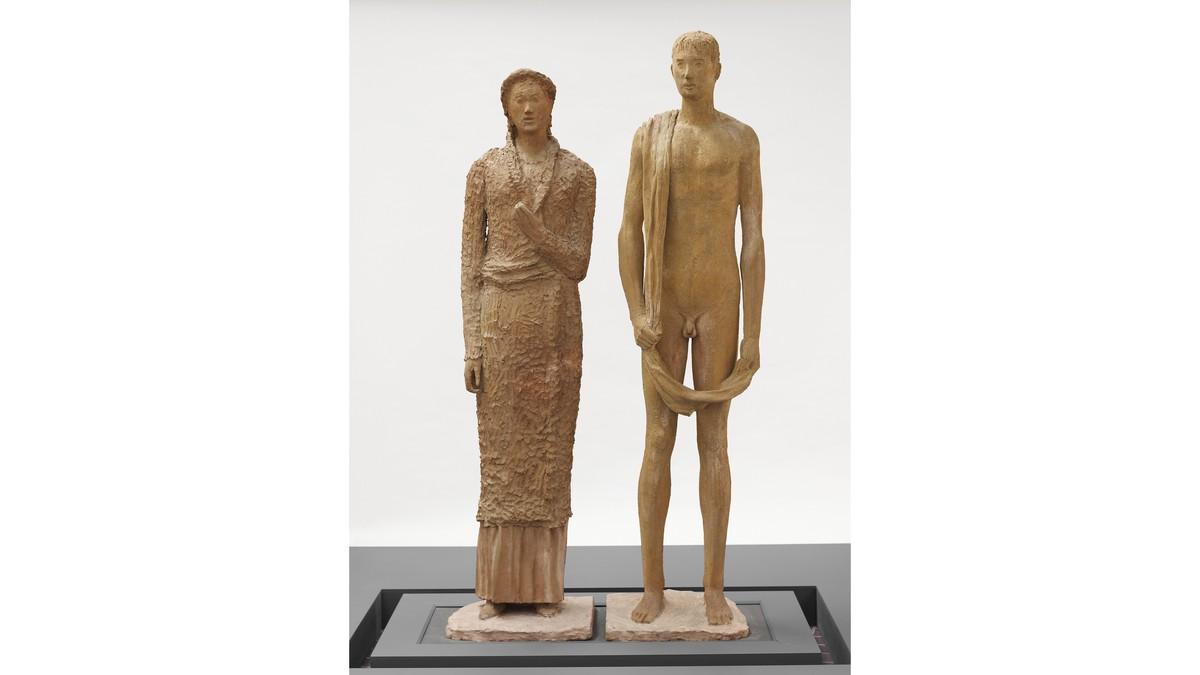
What title would you give this artwork? Arturo Martini chose 'Gare invernale', literally translated as 'Winter Sports'. Not exactly the first association one would make when looking at this still, quiet man and woman. It’s possible that the artist is referring to naturism with this work, a movement that sees harmony between humans and nature as an ideal.
Arturo Martini
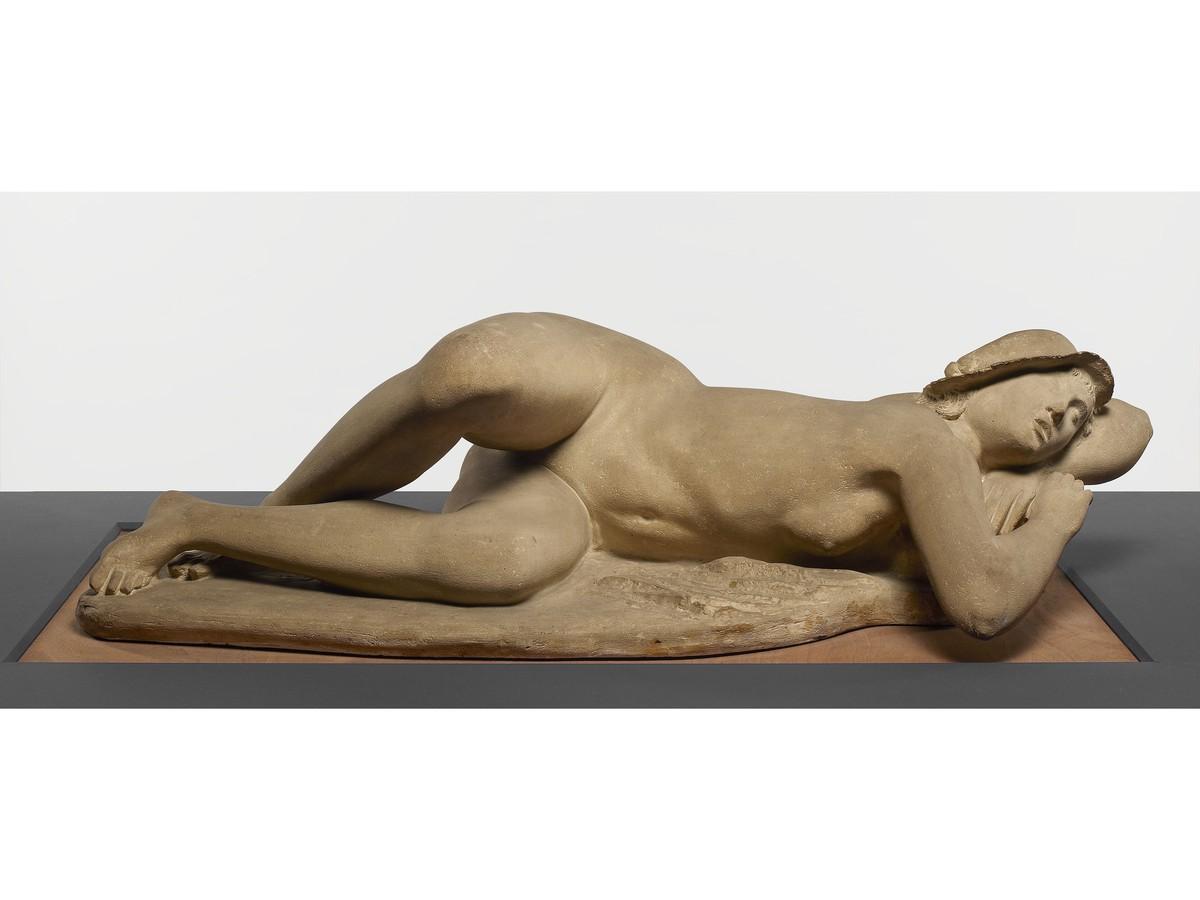
A woman, nude except for a small hat, enjoys the sun. It is a classical female nude, but the headwear adds a surprising detail. The woman's posture also deviates from tradition, giving Arturo Martini’s sculpture a modern touch. In 1930s fascist Italy, sunbathing was promoted as a way to build a perfect and healthy body. The focus on the ideal body was closely linked to national pride.
Arturo Martini
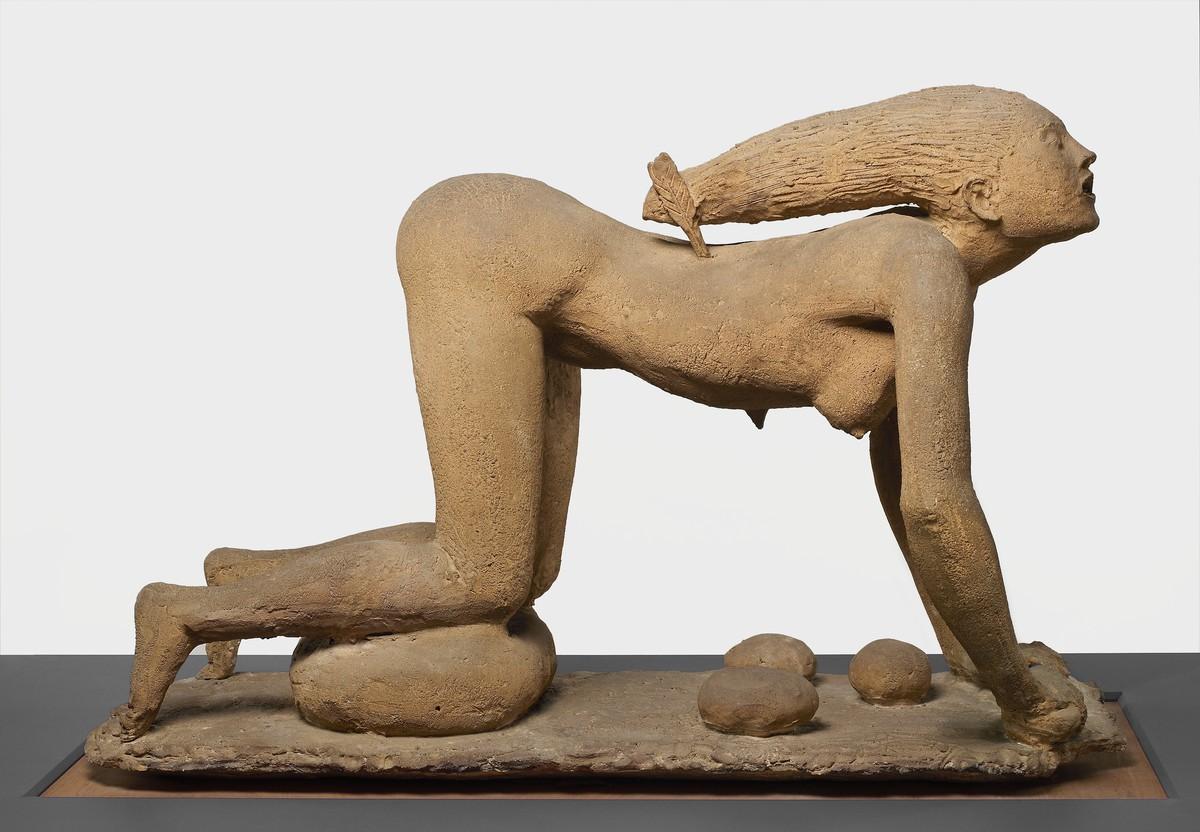
The inspiration for this sculpture comes from a book by Giovanni Verga, about a she-wolf in human form. About the posture of the statue, Arturo Martini says: “The natural form of man is a child crawling on all fours.” He thinks that sculptures of standing people are never beautiful.
Arturo Martini
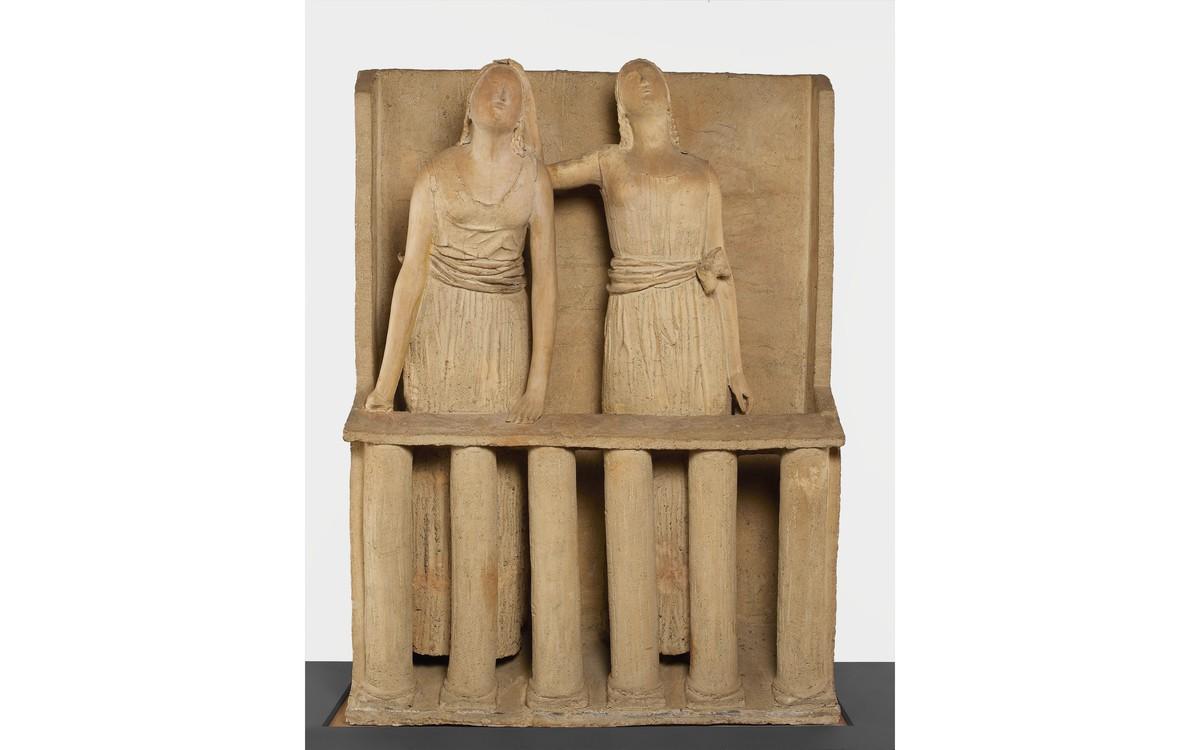
Two women are looking at the moon from their balcony. Arturo Martini uses a typical motif from Romantic literature and painting here: the silent figure gazing at the starry sky. Since the moon is the same for everyone, people can stare at it and feel connected to their loved one, even if that person is far away. The moon is therefore associated with longing, connection, melancholy, and reflection.
This artwork on the map
Easily navigate to La Nena by Arturo Martini and add it to your planned route.